
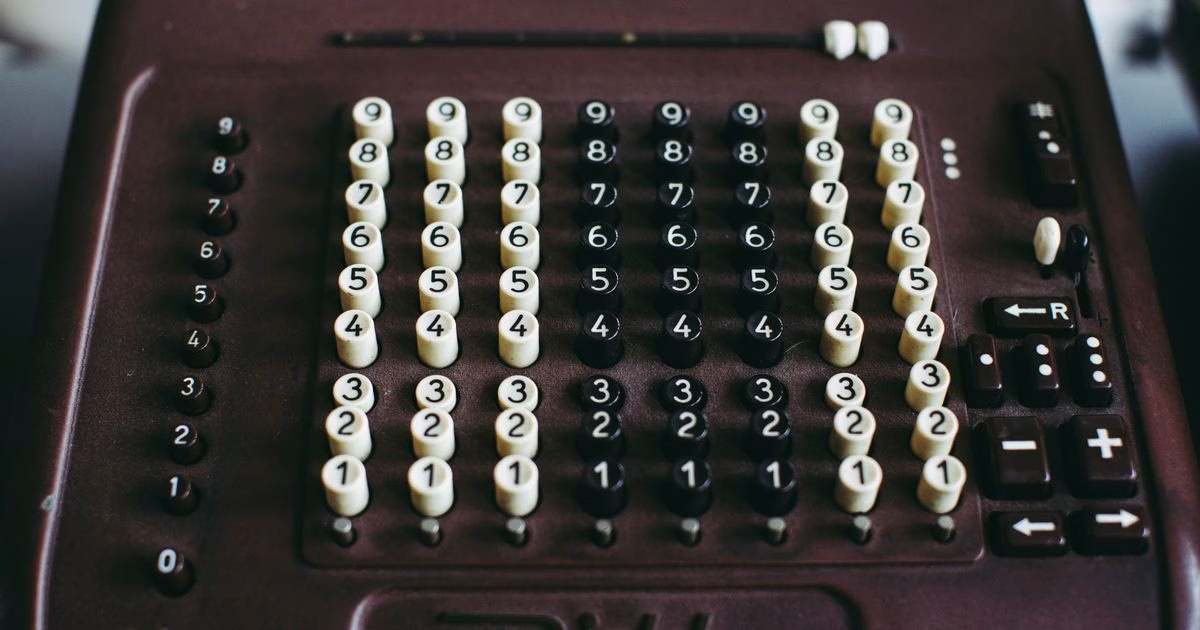
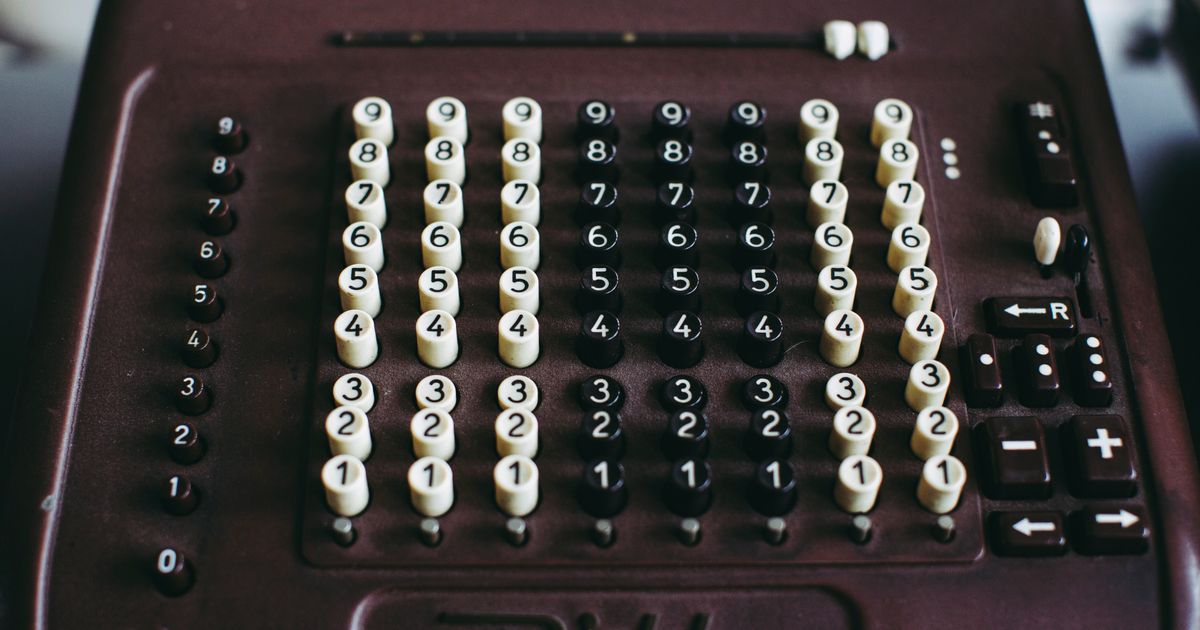
Photo: Markus Spiske · Pexels
Around 370 BC, Socrates warned that a dangerous new technology would ruin human memory. People would stop exercising their minds, he argued, because they could simply look things up. The technology in question? Writing. 📜
Twenty‑four centuries later, we had the same panic about pocket calculators, then about Google, and now — louder than ever — about AI. So it’s worth asking the question honestly: is AI going to make us stupid, or is it just the calculator all over again — a tool that didn’t dull us, but freed our brains for work that actually matters?
The honest answer, as usual, is more interesting than either headline.
🧮 The calculator precedent: the panic that didn’t come true
When calculators entered classrooms in the 1970s, the fear was visceral: a generation that couldn’t do arithmetic. Educators predicted mathematical illiteracy at scale.
It didn’t happen. The most comprehensive research on the topic — a meta‑analysis of 79 classroom studies by Hembree and Dessart — found that calculator use, alongside traditional instruction, didn’t harm students’ maths skills and in most cases improved both achievement and attitude towards the subject.
Why? Because the calculator removed the grunt work, not the thinking. Long division by hand is mostly mechanical procedure — low‑value cognitive labour. Once machines absorbed it, curricula moved up the stack: more algebra, more statistics, more problem‑solving, earlier. We stopped training humans to be slow, error‑prone calculators and started training them to do things calculators can’t.
That’s the optimistic template: offload the mechanical, reinvest the brainpower. And it’s largely the story of every cognitive tool we’ve adopted, from the abacus to the spreadsheet.
📱 We’ve been offloading for a while
The calculator wasn’t a one‑off. Research by Sparrow, Liu and Wegner — the famous “Google effect” study published in Science — showed that when people know information will be available online, they remember the information itself less, but get better at remembering where to find it. Nobody memorises phone numbers anymore; nobody navigates by memory. Our brains adapted from storing to indexing.
Nicholas Carr asked “Is Google Making Us Stupid?” in The Atlantic back in 2008. Nearly two decades on, the fair verdict is: it changed how we think more than how well we think. Different, not dumber.
So far, so reassuring. But here’s where the calculator analogy starts to wobble.
🧠 The debate, at a glance
- Calculator offloaded Computation
- Google offloaded Memory & recall
- AI offloads Reasoning & judgement
- Calculator research verdict No harm, often gains
- Early AI research verdict Depends how you use it
- Deciding factor Driver vs. passenger
⚠️ Why AI is not quite the calculator
A calculator can’t write your essay, form your argument, or make your decision. AI can — and that’s precisely the new risk the research is starting to map.
An MIT Media Lab study made headlines with EEG scans of people writing essays with and without ChatGPT. Participants who relied on the AI showed weaker brain connectivity during the task, remembered less of what “they” had written, struggled to quote their own essays, and felt less ownership of the work. The researchers called the effect “cognitive debt” — convenience now, paid for with engagement later. (Worth noting: it was a small study of 54 people writing essays in a lab, not proof of permanent brain damage — despite what the viral headlines claimed.)
Meanwhile, a Microsoft Research and Carnegie Mellon survey of 319 knowledge workers found a telling pattern: the more people trusted the AI, the less they thought critically about its output. The reverse was also true — people confident in their own skills engaged more critically with AI, using it as a sparring partner rather than an oracle.
The calculator never tempted anyone to stop thinking. AI does — politely, fluently, and on demand.
Read both studies carefully, though, and neither says “AI makes you stupid.” They say something more precise: passive use disengages the brain; active use doesn’t. The MIT participants who wrote first and used AI afterwards showed healthy engagement. The knowledge workers who interrogated AI output kept their critical thinking intact.
⚖️ The real variable isn’t the tool — it’s the driver’s seat
This is the heart of it. The same tool produces opposite outcomes depending on which of these describes you:
- Use that sharpens you: drafting your own thinking first, then using AI to challenge it; asking it to argue against you; verifying claims; using it to learn faster and attempt harder problems than you could alone.
- Use that dulls you: outsourcing the first draft and the judgement; accepting outputs unread; letting it decide instead of inform; using it to avoid ever being confused — because confusion is where learning happens.
The calculator forced this discipline on us, because it could only do one narrow thing. AI doesn’t force anything. It will happily do as much of your thinking as you hand over. The boundary is now yours to draw — and that’s genuinely new.
✅ How to make AI your calculator, not your crutch
A few habits we’ve found keep you in the driver’s seat — at work and everywhere else:
- Think first, prompt second. Sketch your own answer or outline before asking AI. You’ll spot instantly whether its output is better or just faster.
- Interrogate, don’t accept. Ask it what’s wrong with its own answer. Ask for the counter‑argument. The Microsoft study is clear: scepticism is the skill that survives.
- Keep deliberate practice alive. Pilots still fly manual approaches; keep writing, calculating and reasoning unassisted where the skill matters to you.
- Delegate the mechanical, keep the judgement. Meeting notes, reformatting, boilerplate — hand it over gladly. Strategy, taste and decisions — those stay human.
🧭 Our take
The calculator optimists are mostly right. Every cognitive tool in history triggered the same panic, and every time we came out the other side thinking differently — usually at a higher level. There’s no reason to believe raw human capability is suddenly collapsing because software got smarter.
But the calculator analogy comes with fine print: the calculator couldn’t think, so we had to. AI can, so we have to choose to. The people who treat it as a lever — thinking first, verifying always — are already operating beyond what either human or machine could do alone. The people who treat it as a chauffeur for their brain will, slowly and comfortably, forget how to drive.
The technology won’t decide which group you’re in. Your habits will. 🧠
We’ve written before about what this means for content and credibility — see our piece on E‑E‑A‑T in the era when AI writes everything. 🌐
CWA Europe uses AI the way we’d recommend anyone use it — as leverage for strategy, never as a substitute for it. Talk to us about your digital strategy.
References & further reading
- Kosmyna, N. et al. (2025) — Your Brain on ChatGPT: Accumulation of Cognitive Debt when Using an AI Assistant for Essay Writing Task. MIT Media Lab. media.mit.edu
- Lee, H.-P. et al. (2025) — The Impact of Generative AI on Critical Thinking: Self-Reported Reductions in Cognitive Effort and Confidence Effects From a Survey of Knowledge Workers. Microsoft Research & Carnegie Mellon University, CHI 2025. microsoft.com/research
- Hembree, R. & Dessart, D. J. (1986) — Effects of Hand-Held Calculators in Precollege Mathematics Education: A Meta-Analysis. Journal for Research in Mathematics Education.
- Sparrow, B., Liu, J. & Wegner, D. M. (2011) — Google Effects on Memory: Cognitive Consequences of Having Information at Our Fingertips. Science.
- Carr, N. (2008) — Is Google Making Us Stupid? The Atlantic. theatlantic.com
Cover photo: Markus Spiske · Pexels.
Frequently asked questions
Did calculators actually make people worse at maths?
No — and this was studied extensively. A meta-analysis of 79 classroom studies (Hembree & Dessart, 1986) found that calculator use alongside normal instruction did not damage basic skills, and at most grade levels improved both computational ability in problem-solving contexts and students' attitudes towards mathematics. What changed was the curriculum: with mechanical arithmetic offloaded, education shifted towards higher-order skills like algebra, statistics and modelling. The fear of mass mathematical illiteracy simply never materialised.
What does the MIT "cognitive debt" study actually show?
The 2025 MIT Media Lab study used EEG headsets to monitor 54 participants writing essays with ChatGPT, with a search engine, or with no tools at all. AI-assisted writers showed the weakest brain connectivity during the task, poorer recall of their own text, and lower feelings of ownership. Importantly, the effect depended on sequence: participants who wrote unassisted first and then used AI showed strong engagement. The study is small, lab-based, and limited to essay writing — it demonstrates that passive AI reliance reduces engagement in the moment, not that AI causes permanent cognitive decline.
How can I use AI without losing my skills?
The research points to one core principle: stay the driver. Form your own view or draft before prompting, so AI output has something to be compared against. Actively interrogate responses — ask for counter-arguments, check claims, edit rather than accept. Keep practising the skills you care about without assistance, the way pilots maintain manual flying hours. And be deliberate about what you delegate: mechanical tasks (formatting, summarising, boilerplate) are safe to offload; judgement, strategy and taste are the muscles you should keep exercising.
Is AI really comparable to the calculator, or is that analogy flawed?
It's half right. Like the calculator, AI offloads cognitive labour and can free humans for higher-value work — and history suggests we adapt to such tools rather than degrade. The flaw in the analogy is scope: a calculator automates one narrow, mechanical sub-task (computation), while AI can automate the entire chain of reasoning, writing and deciding. The calculator physically couldn't do your thinking for you; AI will if you let it. That makes the outcome a matter of personal discipline rather than technological destiny — which is exactly why the same tool sharpens some users and dulls others.